Michael is 58, an SMSF trustee in regional Victoria. His fund holds $1.9 million in Australian shares and a $2.3 million rural property — total super balance: $4.2 million. He spent two years worrying that Division 296 would tax him on the paper increase in his land's value every single year, even if he never sold. The good news: that version of the law was scrapped in October 2025. The current law taxes realised earnings. The bad news: it is still very real, it starts on 1 July 2026, and Michael has one irreversible election to make before 30 June.
The Treasury Laws Amendment (Building a Stronger and Fairer Super System) Act 2026 received Royal Assent on 13 March 2026. It is confirmed law. Approximately 80,000 Australians — roughly 0.5% of super fund members — will be subject to an additional 15% tax on the portion of their super earnings attributable to balances above $3 million. For a fund earning 12% per year on a $4 million balance, that means roughly $20,000–$25,000 in extra tax per year.
What Is Division 296 Tax?
Division 296 is a new Part of the Income Tax Assessment Act 1997 that imposes an additional tax on super earnings above a threshold balance. It does not replace the existing 15% fund tax — it adds on top of it. (Don't confuse it with Division 293, the long-standing extra 15% on contributions for people earning above $250,000 — the two can apply independently.)
| Balance Range | Additional Tax Rate | Total Effective Rate | Threshold Indexation |
|---|---|---|---|
| Below $3M | 0% | 15% (standard fund tax only) | — |
| $3M – $10M (Tier 1) | 15% | 30% on that portion | Annually in $150K increments (CPI) |
| Above $10M (Tier 2) | 25% | 40% on that portion | Annually in $500K increments (CPI) |
Both thresholds are indexed annually to the December quarter CPI (All Groups, weighted average of 8 capital cities). This means the $3 million threshold will gradually increase over time, protecting more members from crossing it due to inflation alone.
"This affects approximately 80,000 Australians in year one — roughly 0.5% of super fund members. But as balances grow, that number will rise."— Treasury estimate, cited by ATO (ato.gov.au)
How Is the Division 296 Tax Calculated?
The ATO calculates Division 296 tax using your total super balance (TSB) — the combined value of all your super accounts across all funds. The formula has four steps.
- Determine your earnings for the year. Earnings = Closing TSB − Opening TSB ± contributions ± withdrawals ± pension payments. This is a cash-flow-adjusted measure of how much your super grew during the income year.
- Calculate your "above-threshold proportion." Proportion = (Closing TSB − $3,000,000) ÷ Closing TSB. This is the share of your balance that sits above the threshold.
- Taxable earnings under Div 296 = Earnings × Proportion.
- Division 296 tax = Taxable earnings × 15% (Tier 1) or 25% (Tier 2).
Michael's worked example: Opening TSB $3.5M, Closing TSB $4.0M. No contributions or withdrawals.
- Earnings: $4.0M − $3.5M = $500,000
- Proportion: ($4.0M − $3.0M) ÷ $4.0M = 25%
- Taxable earnings: $500,000 × 25% = $125,000
- Division 296 tax: $125,000 × 15% = $18,750
His fund also pays 15% fund tax on the full $500,000 earnings ($75,000). So total tax on that year's super earnings is $93,750 — vs $75,000 without Division 296. The extra $18,750 must be paid within 84 days of receiving an ATO assessment notice.
Velofy models salary sacrifice and super strategy ranked by dollar impact — see how to reduce your taxable super earnings before 1 July.
Run My Super Strategy → Free · ATO 2025–26 · No signup
The Unrealised Gains Controversy — and Why It Changed
For two years (2023–2025), the original Division 296 proposal would have taxed super members on paper gains they had never actually received — using the change in fund value (including mark-to-market increases in property or unlisted assets) as the tax base. This was condemned by the Tax Institute as "an ill-conceived overreach" and created severe hardship concerns for SMSF trustees holding illiquid assets like farms and business real property.
The October 2025 revision removed unrealised gains from the calculation and substituted the realised earnings approach described above. Under the current law, the annual TSB-based earnings calculation still captures paper movements in fund value (because TSB includes all assets at market value as at 30 June), but this is a smoothed measure — not a direct annual tax on unrealised gains on individual assets.

The Cost-Base Reset Election — Act Before 30 June 2026
This is the single most time-sensitive action item for every affected SMSF member. The legislation allows a one-time election to reset the cost base of all fund assets to their market value as at 30 June 2026.
What this achieves: Any capital appreciation that occurred before 1 July 2026 is locked in at the new cost base and will not be included in future Division 296 earnings calculations when assets are eventually sold. For Michael's rural property — which may have appreciated significantly since he acquired it — this could be worth tens of thousands of dollars in avoided future tax.
- All-or-nothing: The election applies to every asset in the fund simultaneously — you cannot cherry-pick.
- Irreversible: Once made, it cannot be reversed or amended.
- Deadline: The election must be made before 30 June 2026. There is no extension.
- Valuations required: Non-listed assets (property, business assets, private equity) must have a defensible, independent market valuation as at 30 June 2026 to support the reset cost base.
For SMSF trustees holding only listed securities (ASX shares, ETFs), the decision is simpler — market prices are objective and readily available. The critical complexity is for funds holding unlisted assets. Begin the valuation process now if you have not already.
SMSF Trustees with Farms and Business Property
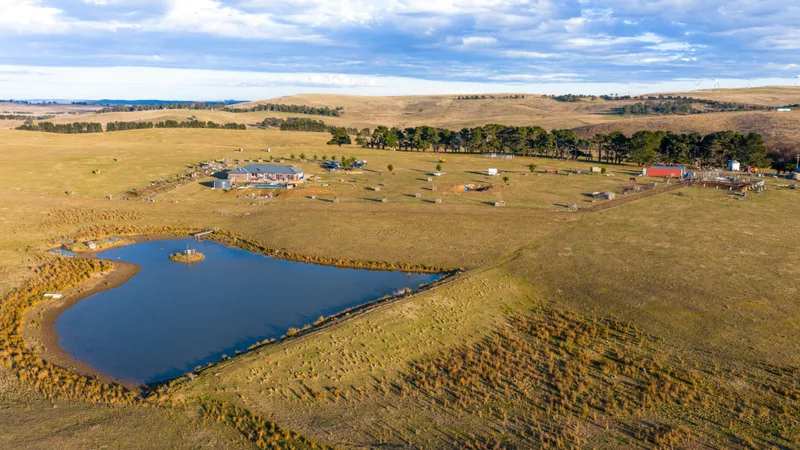
SMSF trustees holding business real property (BRP), agricultural land, or other illiquid assets were the most alarmed by the original proposal — and with good reason. The realised earnings revision reduced (but did not eliminate) the concern. Three issues remain:
- Annual TSB valuation. The Superannuation Industry (Supervision) Act already requires annual market valuations of SMSF assets. Division 296 makes defensible valuations more critical than ever — an inflated property valuation could increase your taxable earnings calculation.
- Funding the tax without selling the asset. If your fund earns $400K in a year (mostly via land appreciation in TSB) and the Division 296 tax is $15,000, that $15,000 must come from somewhere. Ensure your SMSF holds sufficient liquid assets (cash, term deposits, listed equities) to meet the 84-day payment window without forced property sale.
- The cost-base reset election. For trustees with long-held appreciating land, this election is almost certainly in their interest — but only if the valuation is accurate and obtainable before 30 June 2026.
5 Steps to Take Before 1 July 2026
- Confirm your TSB. Check your total super balance across all funds via myGov → ATO → Super → Information. If your combined balance is above $3 million or approaching it, Division 296 applies or will apply soon.
- Decide on the cost-base reset election. Engage your SMSF auditor or adviser to model whether resetting the cost base of fund assets as at 30 June 2026 is beneficial. For most funds with significant pre-2026 appreciation, it will be — but the all-or-nothing, irreversible nature requires careful modelling.
- Commission independent valuations. If your SMSF holds property, business assets, or other unlisted investments, engage a qualified valuer now. Valuations take time, and 30 June is a hard deadline.
- Review your liquidity position. Ensure the SMSF holds enough cash or liquid assets to cover estimated Division 296 tax payments without forcing asset sales. Model your expected TSB growth rate and proportion to calculate approximate annual liability.
- Consider restructuring contributions or pension phase. Members in pension phase do not pay fund-level CGT on earnings, but the TSB calculation for Division 296 purposes includes all super accounts. A specialist SMSF adviser or Big 4 firm can model whether any restructuring changes your exposure.
- Confirmed law — Royal Assent 13 March 2026, starts 1 July 2026
- 15% additional tax on super earnings attributable to TSB above $3M (30% total effective rate)
- 25% additional tax on earnings attributable to TSB above $10M (40% total effective rate)
- ~80,000 Australians affected in year one (Treasury estimate)
- Cost-base reset election must be made before 30 June 2026 — all-or-nothing and irreversible
- Realised earnings (NOT unrealised gains) — October 2025 revision removed the unrealised gains model
- First ATO assessments: after 30 June 2027; 84-day payment window from assessment date
- Thresholds indexed annually (CPI, in $150K increments for Tier 1)
Velofy models concessional contributions and super strategies — see which moves reduce your taxable income most this financial year.
Optimise My Super → Free · ATO 2025–26 · No signupCovers trustee obligations, investment strategies, the Division 296 tax, pension phase, and how to structure your fund to minimise tax on balances over $3 million.
Shop on Amazon AU →Step-by-step record-keeping for SMSF trustees — contribution tracking, investment registers, minutes templates, and Division 296 election checklists.
Shop on Amazon AU →Frequently Asked Questions
What is Division 296 tax?
Division 296 is an additional 15% superannuation tax on the proportion of annual super earnings attributable to a total super balance above $3 million — lifting the effective rate on those earnings from 15% to 30%. A second tier applies a 25% additional tax (40% total) on earnings from balances above $10 million. The law received Royal Assent on 13 March 2026 and takes effect from 1 July 2026. Source: ATO.
How is Division 296 tax calculated?
Step 1: Earnings = closing TSB − opening TSB ± contributions / withdrawals. Step 2: Proportion = (closing TSB − $3M) ÷ closing TSB. Step 3: Taxable earnings = earnings × proportion. Step 4: Div 296 tax = taxable earnings × 15%. Example: $500K earnings on a $4M closing balance — 25% proportion = $125K taxable = $18,750 tax.
Does Division 296 tax unrealised capital gains?
Not directly. The original 2023 proposal would have, but unrealised gains were removed in the October 2025 revision. The current law uses a realised earnings approach based on the change in your total super balance — not mark-to-market movements on individual assets. However, TSB changes do reflect market revaluations of fund assets, so rapid property appreciation still flows through the calculation.
What is the Division 296 cost-base reset election?
SMSF members can elect to reset all fund assets' cost bases to 30 June 2026 market values, excluding pre-2026 appreciation from future Division 296 calculations. The election is all-or-nothing, irreversible, and must be made before 30 June 2026. Independent valuations are required for non-listed assets. Source: DBA Lawyers, GrowSMSF.
When does the ATO issue Division 296 tax assessments?
The first Division 296 income year is 2026–27. ATO assessments will issue after receiving TSB data — in practice, late 2027 or early 2028 for most taxpayers. You then have 84 days to pay from the assessment date. Payment can come from personal funds or by releasing amounts from super.
Sources
- ATO — Better Targeted Superannuation Concessions (Division 296)
- Grant Thornton — Division 296 Has Passed Parliament (2026)
- DBA Lawyers — Revised Division 296 Super Tax from 1 July 2026
- Accurium — Div 296 Is Now Law (March 2026)
- GrowSMSF — Should You Make the Cost-Base Election?
- Parliament of Australia — Treasury Laws Amendment (Building a Stronger and Fairer Super System) Bill 2026