Mia is 27, working full-time on the General Retail Industry Award in Adelaide. On her first July payslip this year, her hourly rate went up 4.75% — she didn't ask for it, and her employer didn't decide it. The Fair Work Commission did, in its 2026 Annual Wage Review. The question Mia should ask isn't "did I get a rise?" — it's "did this rise actually beat inflation?" This year the answer is yes — but one year never tells the whole story.
Fair Work July 2026 — the verified numbers:
- National Minimum Wage: up 6% to $26.44/hour ($1,004.90 for a 38-hour week — above $1,000 for the first time)
- Modern award minimum rates: up 4.75% — a separate, lower figure covering about 2.8 million award-reliant workers
- Effective: the first full pay period on or after 1 July 2026
- Inflation to beat: CPI ran at 4.0% in the year to August 2026 (ABS) — up from 3.5% to July; it was 4.6% to March

Who Gets the 4.75% Award Increase?
The 4.75% applies to modern award minimum rates — the legally binding pay floors that cover most retail, hospitality, cleaning, care, clerical, and trade roles. Fair Work Commission research puts the number of workers paid exactly the award minimum at about 2.8 million, or 21% of the Australian workforce. If that's you, the increase is automatic: your employer must apply it from the first full pay period on or after 1 July 2026, no negotiation required.
Three groups it does not automatically reach:
- Above-award earners. If you're paid, say, $2 above the award rate, your employer only has to lift you if the new minimum overtakes your current rate. Many absorb the increase into the existing margin — which means your real pay quietly shrinks.
- Enterprise agreement employees. Your agreement's own pay schedule applies (its base rates can never fall below the award, but its increases follow the agreement's clauses, not the review).
- Award-free employees. Professionals on individual contracts get nothing automatic from the review — for you, the 4.75% is a benchmark to negotiate against, not an entitlement.
Enter your salary and the date of your last rise — the calculator compounds ABS CPI across every year since and shows the real gap in dollars.
The Minimum Wage Crosses $1,000 a Week
The National Minimum Wage got a bigger lift than awards: 6%, from $24.95 to $26.44 an hour. For a full-time 38-hour week that's $1,004.90 — up $56.90 a week, or about $2,959 a year before tax. It's the first time the full-time weekly minimum has passed the $1,000 mark. Casual employees add their casual loading (typically 25%) on top of the new rate.
The minimum wage applies only to employees not covered by any award or agreement — a small group. But the Commission deliberately gave the lowest-paid the largest percentage rise: 6% for the minimum wage against 4.75% for awards, arguing low-income households have carried the heaviest share of the 2021–2026 inflation run.
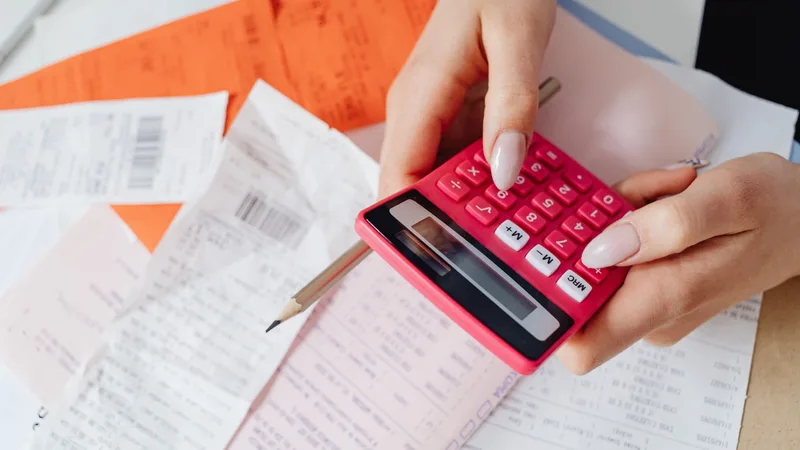
4.75% vs 4% Inflation — Is It a Real Pay Rise?
Here's the maths. CPI inflation was 4.0% for the year to August 2026 (ABS, released 30 September; it was 3.5% to July, and 4.6% to March, when the Commission made its decision). Against that, the 4.75% award increase is a real-terms gain of about 0.75 percentage points, ahead of inflation but only just. The 6% minimum-wage rise clears the bar more comfortably, by about 2 points.
"Award rises outpaced general wage growth this year — the Wage Price Index rose 3.2% in the year to June 2026. If you're not award-covered and your last rise was under 4%, you went backwards in real terms."— Velofy analysis of ABS catalogues 6401.0 (CPI, August 2026) and 6345.0 (WPI, June quarter 2026)
And one year never tells the whole story. Prices have risen about 27% since January 2021 (ABS CPI, to August 2026). A worker whose pay has crept up 3% a year over that stretch is still meaningfully behind 2021 purchasing power — a single 4.75% doesn't close the gap, it just stops it widening. That cumulative gap, not this year's decimal-point contest, is the number worth taking into a pay conversation. The Velofy Pay Rise Calculator works it out from your actual last-rise date, and shows how much of it the July 2024 tax cuts handed back.
What Actually Lands in Your Pocket
A pay rise is taxed at your marginal rate, so the take-home share is smaller than the headline. Take a full-time minimum-wage worker moving from $49,296 to $52,255 a year: of the $2,959 rise, roughly $1,970 lands in the bank after 30% tax, the 2% Medicare levy, and the Low Income Tax Offset phase-out take their share. There's one sweetener this year — the bottom tax rate dropped from 16% to 15% on 1 July 2026, worth up to $268 a year on top of any rise.
Two follow-on effects worth checking after any rise: whether the higher income pushes you over the $69,528 HECS repayment threshold for 2026–27 (the HECS calculator shows the exact repayment at your new salary), and what the rise does to your bracket position and deduction value (the tax calculator runs both in 30 seconds).