Dave Chen is 38, a plumber based in Melbourne earning $95,000 a year. He owns a ute, a full kit of trade tools, and works five job sites a week. Every tax time he claims what he thinks is right — but until he ran his numbers through a calculator, he had no idea he was leaving more than $3,700 on the table each year. The issue wasn't what he was claiming. It was how.
This guide covers every deduction available to Australian tradies in 2025–26 — and the specific rules the ATO is focused on at tax time. All figures are sourced directly from the ATO and verified for the current financial year.

What Tradies Can Claim in 2025–26
The ATO's occupation guide for tradespersons sets out seven primary deduction categories. To claim any of them, the expense must be directly connected to your income-earning activities, paid by you (not reimbursed), and substantiated with a receipt if your total work-related claim exceeds $300.
| Deduction category | Rule | 2025–26 amount / rate |
|---|---|---|
| Tools ≤ $300 each | Immediate deduction, work-only use | Full cost in year purchased |
| Tools > $300 each | Depreciate over effective life | Or $20K write-off if eligible |
| Vehicle (car) | Cents-per-km OR logbook | 88c/km up to 5,000 km |
| Vehicle (ute ≥ 1 tonne) | Logbook method only | Business % of actual costs |
| PPE and workwear | Protective or logo-branded only | Full cost + laundry |
| Phone and internet | Work-use percentage only | Actual cost × work % |
| Licences and registrations | Required for work, not initial entry | Full renewal cost |
| Union fees | Deductible in full | Full amount paid |
| Self-education | Must relate to current role | Course fees, books, travel |
Source: ATO Tradesperson occupation guide (ato.gov.au), verified May 2026.
Velofy may earn a commission on qualifying purchases made through Amazon AU links on this page, at no extra cost to you.
Replacing the ute? Stamp duty on the purchase differs by state — work out the duty before you sign.
The standard ATO-compliant logbook used by tradies across Australia. Records date, destination, purpose, odometer readings, and total km per trip. Required to claim the logbook method on your ute.
Shop on Amazon AU →
The Ute Rule: Logbook vs 88c/km
This is the most misunderstood rule in tradie tax — and the most expensive mistake to make. The 88c/km cents-per-kilometre method applies only to cars. A car is defined by the ATO as a motor vehicle designed to carry fewer than nine passengers and with a carrying capacity of less than one tonne.
Most tradies drive a ute with a carrying capacity of one tonne or more — which means it does not meet the ATO's definition of a "car." You cannot use the cents-per-km method on a ute. You must use the logbook method, tracking your actual business kilometres as a percentage of all kilometres driven.
"A tradie with 4,200 business kilometres using cents-per-km claims $3,696. The same tradie using the logbook method at 70% work use on $12,000 in running costs claims $8,400 — a difference of $4,704."— CarSavvy.app, ATO logbook method data (2026)
Even if you drive a regular car and can use cents-per-km, the logbook method is often more valuable for high-km tradies. The 5,000 km cap on cents-per-km ($4,400 maximum claim at 88c/km) becomes a ceiling — the logbook method has no cap.
Velofy's Tax Advisor has your profession pre-selected. Enter your income and it calculates your optimal deduction strategy including vehicle, tools, and PPE.

Tools and Equipment: The $300 and $20,000 Rules
Tool deductions follow a two-tier rule. An item costing $300 or less that is used only for work can be claimed in full in the year you buy it. An item costing more than $300 must generally be depreciated over its effective life — unless you qualify for the instant asset write-off.
For the 2025–26 income year, businesses (including sole traders) with an aggregated annual turnover under $10 million can immediately deduct the full cost of eligible assets costing less than $20,000. This applies per asset — you can write off multiple items. The threshold drops to $1,000 from 1 July 2026, so equipment purchased before 30 June 2026 and first used or installed by that date qualifies.
Industry-standard multi-tool used across trades. Work-only use = immediately deductible in full.
Shop Amazon AU →Standard tradie tape measure. Under $300, work-only = full immediate deduction, no depreciation required.
Shop Amazon AU →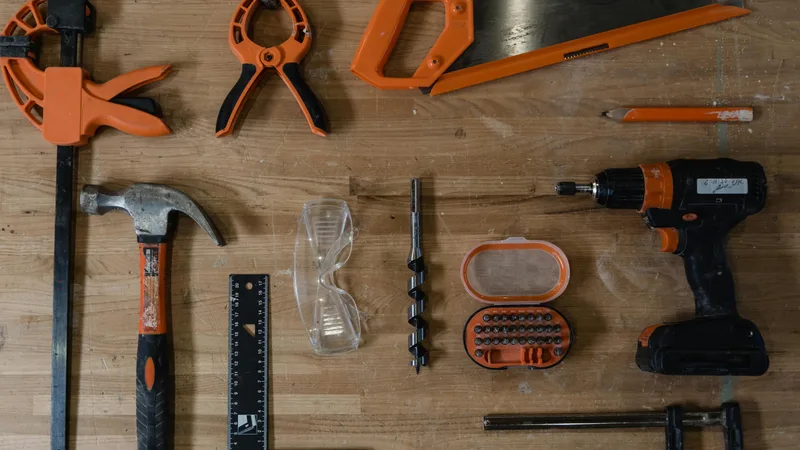
PPE, Workwear, and What Counts as Deductible Clothing
Protective clothing and safety gear is fully deductible — but ordinary clothing is not, even if you only wear it at work. The ATO's test is whether the clothing provides protection from injury or is required by your employer.
Deductible items include: steel-cap boots, hi-vis vests and jackets, hard hats, safety glasses, gloves, and work pants with specific protective features (e.g. flame-resistant, reinforced knee pads). Plain black work trousers are not deductible even if worn every day on-site.
| Item | Deductible? | ATO reason |
|---|---|---|
| Steel-cap boots | ✅ Yes | Protective function |
| Hi-vis vest / jacket | ✅ Yes | Safety requirement |
| Hard hat | ✅ Yes | Protective function |
| Hard Yakka work pants (reinforced) | ✅ Yes | Protective function |
| Plain black trousers | ❌ No | Conventional clothing |
| Generic sneakers | ❌ No | Not protective |
| Sunscreen (outdoor work) | ✅ Yes | Sun protection for outdoor workers |
Source: ATO work-related clothing deductions guide (ato.gov.au).
Reinforced construction, fire-retardant options, and hi-vis variants — all deductible as protective clothing. Also available: hi-vis vests, steel-cap boots, and site safety gear.
Shop on Amazon AU →
What You Cannot Claim: The ATO's Audit Targets for Tradies
The ATO's 2025 tax time focus includes work-related expenses with over $300 in total claims — these require written evidence. For tradies, three specific errors are repeatedly flagged:
- Home-to-work travel. Driving from home to your first job site is private travel. It is not deductible, even if you carry tools in your ute. This applies regardless of how far you drive or how early you start. Travel between sites during the day is deductible.
- Using cents-per-km on a ute. As covered above, the 88c/km method only applies to cars. Using it on a ute is an incorrect claim that the ATO identifies through Single Touch Payroll (STP) data matched against vehicle registration records.
- Tool claims without receipts. You can claim up to $300 in total work-related expenses without written evidence — but this is a combined total, not per item. If your tools claim alone exceeds $300, you need receipts for every item.
Dave's Numbers: A Melbourne Plumber's Deduction Breakdown
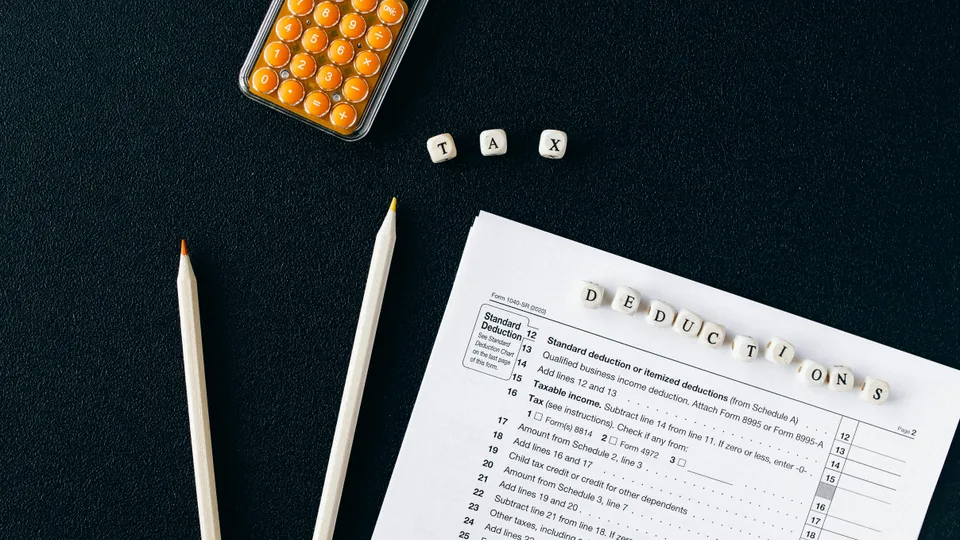
Dave earns $95,000 as a Melbourne plumber. Here is what his optimised deduction claim looks like for 2025–26, using the logbook method on his ute and the $300 immediate deduction on his tools:
| Deduction | Basis | Amount |
|---|---|---|
| Ute — logbook method | 70% of $12,000 running costs | $8,400 |
| Tools (5 items ≤ $300 each) | Work-only, receipts held | $1,100 |
| PPE and workwear | Boots, hi-vis, hard hat, work pants | $620 |
| Phone — work portion | 60% of $1,200 annual bill | $720 |
| Union fees and licences | MWOA membership + plumbing licence | $480 |
| Total deductions | $11,320 |
Illustrative. Dave's taxable income: $95,000 − $11,320 = $83,680. At 30% Stage 3 marginal rate, estimated tax saving: ~$3,396. Use the Velofy calculator to model your own figures.
If Dave also qualifies for the $20,000 instant asset write-off and purchases a new drill press for $3,800 before 30 June 2026, his total deductions rise to $15,120 — a tax saving of approximately $4,914 at his marginal rate.
Velofy's free Tax Advisor opens with Tradesperson selected. Enter your income and it ranks every deduction strategy by dollar impact for your specific situation.
TL;DR — Tradie Tax Deductions 2025–26
- Ute (≥1 tonne): Must use logbook method — 88c/km does NOT apply. Potential extra claim: $4,700+
- Tools ≤ $300: Immediate full deduction, work-only use, receipts required if total WRE > $300
- Instant asset write-off: $20,000 per asset until 30 June 2026. Drops to $1,000 from 1 July 2026
- PPE/workwear: Protective gear deductible; conventional clothing (even worn to work) is not
- Home-to-work travel: Never deductible — the ATO's #1 audit target for tradies
- Records: Keep a 12-week logbook, receipts for all tools, and phone-use records
- Dave's result: $11,320 in deductions → ~$3,396 tax saving at 30% Stage 3 marginal rate
Complete Tradie Deduction Reference: 30 Items Ranked by Dollar Value
Beyond Dave's $11,320 breakdown, here are 30 deductions Australian tradies can legitimately claim — ranked by typical dollar value at a representative $95,000 tradesperson income (Stage 3 marginal rate 30% + 2% Medicare = 32%, in force since 1 July 2024). Sole-trader-specific claims marked "sole trader"; PAYG-employed tradies use the standard work-related deduction labels D1-D5.
| Deduction item | Typical $ | ATO label | $ saved @ 32% | Notes |
|---|---|---|---|---|
| Tools & equipment | ||||
| Hand tools individually <$300 (instant) | $1,200 | D5 | $384 | Each tool a separate item; receipts essential |
| Power tools $300-$1,000 (depreciate) | $2,400 | D5 | $768 | Effective-life depreciation; ATO sched 25 |
| Major equipment via $20K Instant Asset Write-Off (sole trader) | $8,000 | Business | $2,560 | $20K cap per asset; first used by 30 June 2026; turnover <$10M |
| Tool repair + servicing | $280 | D5 | $90 | Maintenance of work-essential items |
| Battery replacements + chargers | $180 | D5 | $58 | Consumables for cordless tool kit |
| Tool insurance (theft from site/vehicle) | $240 | D5 | $77 | Typically separate from home contents |
| Toolbox / tool storage | $320 | D5 | $102 | Depreciate if >$300; instant if under |
| Vehicle (ute / van) | ||||
| Ute logbook method (work portion) | $8,400 | D2 | $2,688 | 70% work-use × $12,000 running costs (fuel + rego + insurance + servicing + depreciation) |
| Cents-per-km alternative (5,000 km × 88¢) | $4,400 | D2 | $1,408 | 2025-26 rate; no logbook but capped at 5,000 km |
| Roof racks, tool fitouts, dual-cab modifications | $1,200 | D2 | $384 | Capital improvement; depreciate over effective life |
| Trailer (work-use portion) | $1,800 | D2 | $576 | Eligible for $20K IAWO if sole trader |
| Tolls + parking (work-related only) | $520 | D2 | $166 | e-Tag statements + receipts |
| PPE & workwear | ||||
| Steel-cap boots (compulsory PPE) | $180 | D3 | $58 | Full deduction; PPE never "conventional clothing" |
| Hi-vis shirts + pants | $240 | D3 | $77 | OK whether employer-issued or not, if site requires |
| Wet-weather gear + thermal layers | $160 | D3 | $51 | If used for outdoor work conditions |
| Sun protection (hat + SPF + sunglasses) | $70 | D3 | $22 | Outdoor workers; safety-related |
| Laundry of work-only items (no receipt to $150) | $150 | D3 | $48 | $1/load work-only or $0.50/load mixed |
| Safety glasses + ear protection | $80 | D3 | $26 | PPE; full deduction |
| Hard hat replacement | $50 | D3 | $16 | Annual or per-damage |
| Memberships & licensing | ||||
| CFMEU / AWU / ETU union fees | $880 | D5 | $282 | Full deduction; varies by union + state |
| White Card renewal | $60 | D5 | $19 | If self-funded; many employers cover |
| Trade licence annual fee (electrician, plumber, builder) | $340 | D5 | $109 | State licensing — full deduction |
| Industry association (Master Builders, MPMSA, etc) | $420 | D5 | $134 | If relevant to current trade |
| Self-education & training | ||||
| Trade skill upgrade courses | $650 | D4 | $208 | Must relate to current trade, not new trade |
| Safety + ticket renewals (EWP, forklift, asbestos) | $420 | D4 | $134 | If self-funded |
| Trade reference books + standards (AS/NZS codes) | $220 | D4 | $70 | Each book separate; useful evergreen items |
| Home office & admin (sole traders especially) | ||||
| Home office fixed rate (70¢/hr × admin hours) | $350 | D5 | $112 | 500 hrs typical; covers electricity + internet |
| Mobile phone (work-use portion) | $540 | D5 | $173 | 60% work × $900/yr = $540 claimable |
| Job-quoting / invoicing software (Tradify, ServiceM8) | $420 | D5 | $134 | SaaS subscription = annual deduction |
| Accountant fees + sole trader BAS lodgement | $680 | D10 | $218 | Cost of managing tax affairs — D10 label |
Dollar values are typical 2025-26 figures based on published union, licensing, and retailer data. Tax savings assume 30% Stage 3 marginal rate + 2% Medicare. $20K Instant Asset Write-Off applies only to sole traders / small businesses with aggregated turnover <$10M for FY2025-26 (per ATO IAWO page); the 12 May 2026 Budget announced permanence at $20K from 1 July 2026 but legislation is pending. Verified against ATO Tradies guide on 24 May 2026.
Velofy's Tax Calculator pre-loads the tradie profession profile and ranks all 30 deductions above by dollar impact at your specific income — under Stage 3 marginal rates verified vs ATO on 24 May 2026.
Calculate My Tradie Deductions → Free · ATO 2025–26 · No signupAct Before 30 June 2026 — Two Things to Time
Two significant tradie deduction levers are most valuable before 30 June 2026. First, the $20,000 instant asset write-off — any eligible asset purchased and first used or installed by 30 June qualifies for an immediate deduction under the legislated FY2025-26 rules (Treasury Laws Amendment Act 2025). The 12 May 2026 Federal Budget announced making the $20,000 threshold permanent from 1 July 2026, but that legislation is not yet law as of mid-2026 — if the bill doesn't pass, the default reverts to $1,000. Two scenarios, one conclusion: buying a generator, compressor, or power tool over $1,000 before 30 June locks in the $20,000 treatment with certainty regardless of what happens with the Budget bill.
Second, if you have never kept a vehicle logbook and have been using cents-per-km on your ute, starting a logbook now captures the next 12 weeks — placing you in a strong position for a retrospective claim review with a registered tax agent before 30 June.
Free · No account needed · 100% private · Tradesperson pre-loaded
Frequently Asked Questions
What tools can a tradie claim on tax in Australia?
Tools used solely for work are deductible. Items costing $300 or less are immediately deductible in full. Items over $300 must be depreciated over their effective life — unless you qualify for the $20,000 instant asset write-off (businesses with turnover under $10M, available until 30 June 2026). You must have receipts and the tool must be work-only. Source: ATO (ato.gov.au).
Can I claim my ute on tax as a tradesperson?
Yes — but utes with a carrying capacity of one tonne or more cannot use the 88c/km cents-per-kilometre method. You must use the logbook method, recording business use as a percentage of total kilometres. A logbook over 12 continuous weeks establishes your percentage and is valid for 5 years. For a tradie at 70% work use on $12,000 running costs, the logbook deduction is $8,400 vs $3,696 with cents-per-km — a $4,704 gap. Source: ATO car expenses guide (ato.gov.au).
Is home-to-work travel deductible for tradies?
No. Driving from home to your first job site is private travel and is not deductible — even if you carry tools in your ute. This is the ATO's number-one audit target for tradies. Travel between job sites during the working day is deductible. If your home is a genuine base of operations because your employer does not provide a depot, there are limited exceptions — consult a registered tax agent. Source: ATO tradesperson guide (ato.gov.au).
What is the instant asset write-off for tradies in 2025–26?
For 2025–26, small businesses (including sole trader tradies) with aggregated annual turnover under $10 million can immediately deduct the full cost of eligible assets costing less than $20,000. The threshold applies per asset. Assets must be first used or installed by 30 June 2026. From 1 July 2026, the threshold drops to $1,000. Source: ATO (ato.gov.au/businesses-and-organisations/small-business-newsroom/20000-instant-asset-write-off-for-2025-26).
Sources
- ATO — Tradesperson income and work-related deductions
- ATO — Tradies: be certain about what you can claim
- ATO — $20,000 instant asset write-off for 2025–26
- ATO — Cents per kilometre method (88c/km for 2024–25 and 2025–26)
- CarSavvy — Cents per km vs logbook method 2026
- ATO — 2025 tax deduction priorities and focus areas