David is 51, a teacher in Brisbane with a negatively geared unit in Ipswich. This winter he replaced the unit's corroded hot-water system and renovated a tired bathroom, and now — lodging his 2025–26 return — he faces the question that decides hundreds of dollars: which of those is a deductible repair, and which is a capital improvement claimable at 2.5% a year for 40 years? This guide covers his answer and every other deduction on the rental schedule, plus the law change every investor now needs to plan around.
Two rules to hold at once this lodgement season:
- Your 2025–26 return uses the existing rules in full — negative gearing, the 50% CGT discount, all standard deductions. Nothing below is affected by the Budget changes.
- From 1 July 2027 the law changes (Royal Assent 26 June 2026): rental losses on established dwellings bought after 7:30pm, 12 May 2026 become ring-fenced, and the 50% CGT discount is replaced by CPI indexation. Existing owners are grandfathered; new builds are exempt.
Model your rental loss and tax benefit → Negative Gearing Calculator
Deductible in Full on This Return
For any period the property was rented or genuinely available for rent, these come straight off your rental income:
- Loan interest — on the portion of the loan that funded the rental property. If you've redrawn on the loan for private spending (a car, a holiday), that slice of the interest is never deductible and the split follows the loan for its life.
- Holding costs — council rates, water charges, land tax, landlord insurance.
- Agent and management fees — ongoing commission, letting fees, lease preparation.
- Body corporate levies — with one distinction that catches unit owners: administration fund and general-purpose sinking fund levies are immediately deductible; special-purpose levies raised for a specific capital project (say, replacing the building's roof) are not — they're capital works, claimable at 2.5% a year.
- Genuine repairs and maintenance — plus pest control, cleaning between tenants, advertising for tenants, and your accountant's fee for the rental schedule.
Repairs vs Improvements: David's Bathroom
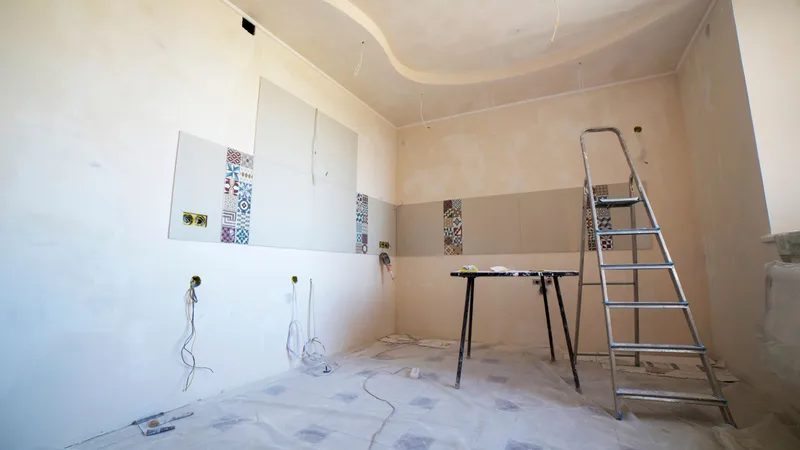
The ATO's test (ruling TR 97/23) is restoration versus betterment. A repair puts something back the way it was, with broadly similar materials — David's replacement hot-water system, fixing a leaking tap, patching a section of damaged fence: deductible this return. An improvement makes it better, bigger or different — David's bathroom renovation with new fixtures, retiling and a better layout is capital works: 2.5% a year over 40 years, not an immediate deduction.
Two traps inside this rule. First, initial repairs: fixing damage or deterioration that existed when you bought the property is never an immediate deduction — even if you only discovered it after settlement. It's treated as capital (and joins the cost base or capital works). Second, wholesale replacement: repairing part of a structure is a repair; replacing the entire thing — a whole new fence, a full roof in upgraded materials — tips into capital territory even when the old one was worn out.
Enter the property's income and expenses — the calculator shows the net loss, the tax benefit at your marginal rate, and your true after-tax holding cost.
Depreciation: The Deduction Most Investors Under-Claim
Two separate systems. Division 43 (capital works): 2.5% a year of the original construction cost, for 40 years, on buildings where construction started after 15 September 1987 — structure, roofing, tiling, built-in cabinetry. It survives changes of ownership, so a 2005-built unit still has years of claims left. Division 40 (plant and equipment): ovens, carpets, blinds, air conditioners, hot-water systems — depreciated over each asset's effective life, but with the 2017 restriction: for contracts signed after 7:30pm AEST on 9 May 2017, plant and equipment that came second-hand with the property cannot be depreciated. Only items that were brand new at purchase, or that you buy and install yourself, qualify. (David's new hot-water system: if it were treated as a replacement asset rather than a repair, it would be his new asset and depreciable — one reason the repair/capital line matters twice.)
The practical move: a quantity surveyor's depreciation schedule — typically $385–$770 for a residential property, itself deductible — documents both divisions for the life of the property. On most post-1987 builds it pays for itself in the first year. Don't forget borrowing expenses either: loan establishment fees, lenders mortgage insurance and title fees over $100 total are claimed over five years (or the loan term if shorter); $100 or less, immediately.
Never Deductible — Don't Let Software Tempt You
- Purchase stamp duty and conveyancing — CGT cost base, not a deduction (they reduce your gain at sale).
- Travel to inspect the property — banned for residential landlords since 1 July 2017, including transport, meals and accommodation. Still one of the ATO's most-flagged incorrect claims.
- Loan principal — only the interest component is deductible.
- Initial repairs and second-hand plant & equipment — per the sections above.
The Law Has Now Changed — What Applies From 1 July 2027
If the law change has you weighing an exit, start with the number that actually matters: see how selling costs, stamp duty and loan interest combine in the full exit ledger — the calculator returns your net walk-away figure for any sale year, with the CGT estimate for investors built in.
Cash Flow Now, Not Next July: The PAYG Variation
If your property runs at a loss, you don't have to wait for a refund at lodgement. A PAYG withholding variation (ATO form NAT 2036) lets the ATO direct your employer to withhold less tax each pay, spreading the negative-gearing benefit across the year. Apply through myGov or a registered tax agent — processing typically takes up to 28 days, and it needs renewing each financial year.
Frequently Asked Questions
What can I claim on my investment property for 2025-26?
For the time the property was rented, or genuinely available to rent, you can claim these straight away: loan interest (on the rental share), council rates, water charges, land tax, property manager fees, landlord insurance, strata admin and general sinking fund levies, genuine repairs and maintenance, pest control, cleaning, advertising for tenants and accounting fees. Some costs are spread over several years instead: the building itself at 2.5% a year, fittings such as ovens, carpets and air conditioners (see the next question for second-hand properties), and borrowing costs over five years. Negative gearing applies in full to your 2025–26 return.
What is the difference between a repair and a capital improvement?
A repair puts something back the way it was, using similar materials, and you can claim it straight away. An improvement makes it better, bigger or different, and you can only claim it over time, at 2.5% a year. Replacing damaged fence palings is a repair; replacing the whole fence with a taller Colorbond one is an improvement. Fixing damage that was already there when you bought the property can't be claimed straight away, even if you didn't know about it.
Can I claim depreciation on a second-hand investment property?
Partly. You can still claim the building itself at 2.5% a year if it was built after 15 September 1987, however many owners it's had. But if you signed the contract after 7:30pm on 9 May 2017, you can't claim depreciation on fittings that came with the property, such as ovens, carpets and air conditioners. New items you buy and install yourself can be claimed in full. A quantity surveyor's depreciation schedule (usually $385–$770, and you can claim that too) works out both.
Is stamp duty on an investment property tax deductible?
No. Stamp duty and conveyancing costs on the purchase aren't rental deductions. They're added to what the property cost you for capital gains tax, which lowers your taxable gain when you sell. The same goes for buyer's agent fees and building inspections at purchase. The exception is stamp duty on the loan itself, where a state still charges it: that's a borrowing cost, claimed over five years.
Is negative gearing still allowed in 2026?
Yes, in full, for the 2025–26 return you lodge now and for 2026–27. The law has changed for later years, though. For an established home bought after 7:30pm on 12 May 2026, rental losses from 1 July 2027 can only be used against rental income and future property gains, not against your salary. Properties you owned or had under contract before then keep the old rules, and new builds can still be negatively geared in full. The change became law on 26 June 2026.